
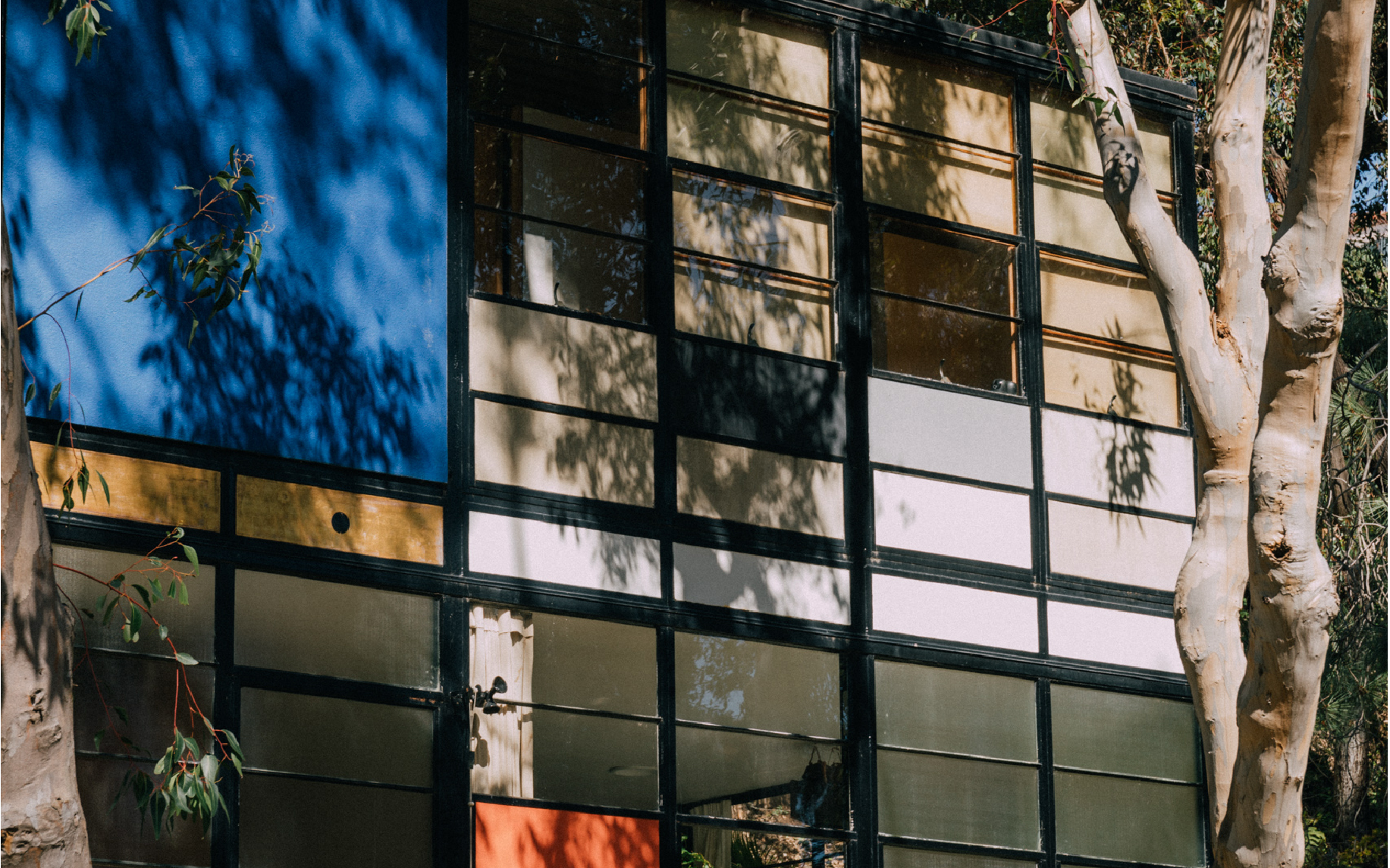
Scattered throughout Los Angeles are many famous examples of modernist architecture and quiet mid-century homes. What stands out in these structures is not just their aesthetic form, but intentionality of how one wishes to live and what kind of atmosphere nurtures deeper thought.
Mid-century modernism emerged in Los Angeles after World War II, blending sleek minimalism with the region’s sunny, indoor-outdoor lifestyle. Architects and designers like Richard Neutra, Charles and Ray Eames, and John Lautner introduced new materials and open floor plans to create homes that felt light, functional, and connected to nature. This movement not only shaped Southern California’s architectural identity but also influenced global design trends of simplicity, innovation, and environmental harmony. Mid-century modern interiors remain iconic symbols of timeless and thoughtful modern living.
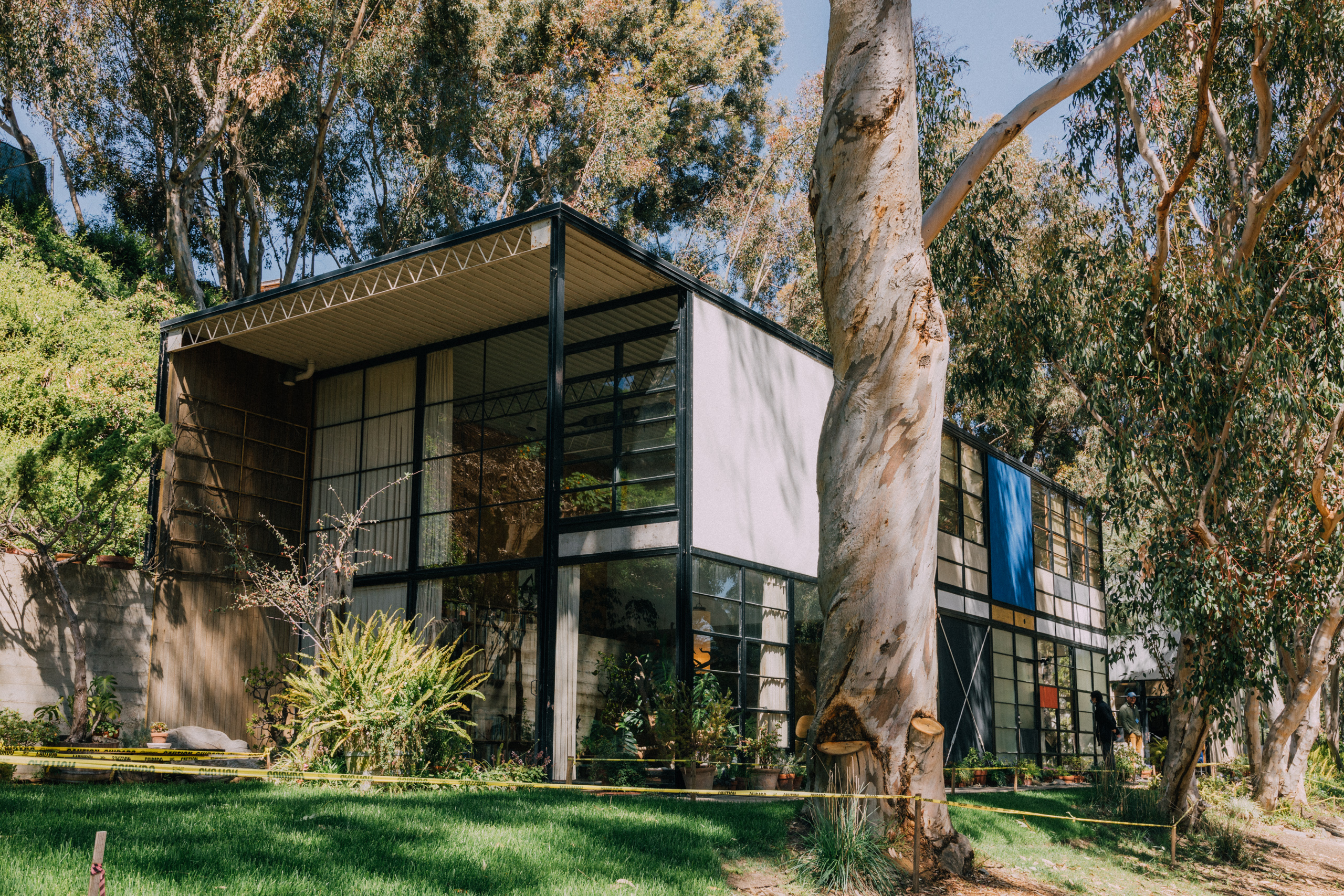
Take, for instance, the Eames House (Case Study House No. 8) in Pacific Palisades. When I first visited, I was quietly overwhelmed by how harmoniously the house seemed to breathe with the surrounding trees. It felt less like a piece of architecture and more like a project in which daily life itself had become art. Decoration was kept to a minimum, colors were bold yet balanced, and within that space, every detail—from where one might sit or think to how one spends time—was meticulously designed. I visit periodically, and each time, the experience seems to reset my mind.
Scattered throughout Los Angeles are many famous examples of modernist architecture and quiet mid-century homes. What stands out in these structures is not just their aesthetic form, but intentionality of how one wishes to live and what kind of atmosphere nurtures deeper thought.
Mid-century modernism emerged in Los Angeles after World War II, blending sleek minimalism with the region’s sunny, indoor-outdoor lifestyle. Architects and designers like Richard Neutra, Charles and Ray Eames, and John Lautner introduced new materials and open floor plans to create homes that felt light, functional, and connected to nature. This movement not only shaped Southern California’s architectural identity but also influenced global design trends of simplicity, innovation, and environmental harmony. Mid-century modern interiors remain iconic symbols of timeless and thoughtful modern living.
Take, for instance, the Eames House (Case Study House No. 8) in Pacific Palisades. When I first visited, I was quietly overwhelmed by how harmoniously the house seemed to breathe with the surrounding trees. It felt less like a piece of architecture and more like a project in which daily life itself had become art. Decoration was kept to a minimum, colors were bold yet balanced, and within that space, every detail—from where one might sit or think to how one spends time—was meticulously designed. I visit periodically, and each time, the experience seems to reset my mind.
I noticed similar qualities in the Schindler and Neutra houses. Their architecture resonates with the flow of time and the subtle shifts in human perception. The open layouts, the way natural light is invited in, and the blurred boundaries between indoors and out—all these seem to express a kind of “margin” beyond words.
I noticed similar qualities in the Schindler and Neutra houses. Their architecture resonates with the flow of time and the subtle shifts in human perception. The open layouts, the way natural light is invited in, and the blurred boundaries between indoors and out—all these seem to express a kind of “margin” beyond words.

There are many similarities between mid-century modern design and Japanese design. Both styles emphasize harmony, minimalism, craftsmanship, and balance. Value is placed on natural materials and connection to the outdoors. Simplicity allows the spaces to feel serene and invites contemplation and comfort.
Through my work in graphic design, I try to embody similar principles: clarity balanced with space for interpretation. In other words, I find beauty in expressions that leave a touch of mystery. Perhaps this stems from my own feeling that things too obvious or too convenient rarely invite affection. That may be why I am drawn so deeply to the understated beauty of Los Angeles architecture—the way it speaks softly, the way its structure seems to live alongside the people within it. I’m moved by the idea that architecture is not just a container for living, but a framework that enriches the quality of everyday life.
There are many similarities between mid-century modern design and Japanese design. Both styles emphasize harmony, minimalism, craftsmanship, and balance. Value is placed on natural materials and connection to the outdoors. Simplicity allows the spaces to feel serene and invites contemplation and comfort.
Through my work in graphic design, I try to embody similar principles: clarity balanced with space for interpretation. In other words, I find beauty in expressions that leave a touch of mystery. Perhaps this stems from my own feeling that things too obvious or too convenient rarely invite affection. That may be why I am drawn so deeply to the understated beauty of Los Angeles architecture—the way it speaks softly, the way its structure seems to live alongside the people within it. I’m moved by the idea that architecture is not just a container for living, but a framework that enriches the quality of everyday life.
Written by Daigo Daikoku
CEO and Art Director
Edited by ZiZi Spak
Designer
Written by Daigo Daikoku
CEO and Art Director
Edited by ZiZi Spak
Designer
The views and opinions expressed in this article are solely those of Daigo Daikoku and NDCLA, and do not necessarily reflect the official policy or position of any other organization, agency, employer, or company. The information presented here is for general informational purposes only and is not intended to provide specific advice. The author(s) make no representations as to the accuracy or completeness of any information in this article or found by following any link within it. The author(s) will not be liable for any errors or omissions in this information, nor for the availability of this information.
The views and opinions expressed in this article are solely those of Daigo Daikoku and NDCLA, and do not necessarily reflect the official policy or position of any other organization, agency, employer, or company. The information presented here is for general informational purposes only and is not intended to provide specific advice. The author(s) make no representations as to the accuracy or completeness of any information in this article or found by following any link within it. The author(s) will not be liable for any errors or omissions in this information, nor for the availability of this information.