
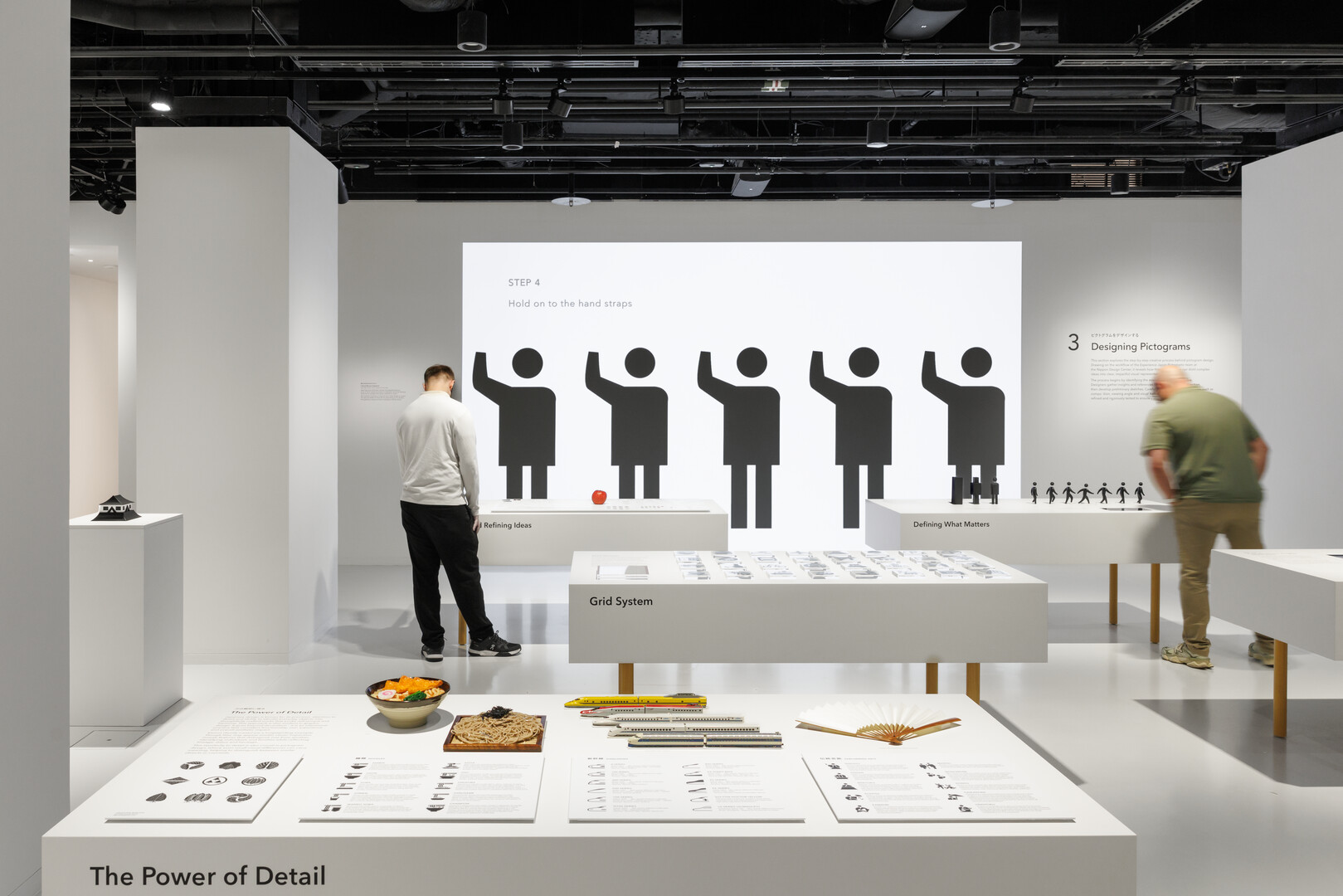
Now that our exhibition “Pictograms: Iconic Japanese Design” is on view in Los Angeles, I would like to share the step-by-step creative process behind our design process. This process reveals how thoughtful design can distill complex ideas into clear, impactful visual representation.
The first step is identifying the essence of an object or idea. Designers gather insights and references to guide the creative direction, then develop preliminary sketches. Careful attention is given to elements like composition, viewing angle, and visual balance. In the final stages, the design is refined and rigorously tested to ensure clarity and universal recognition.
Now that our exhibition “Pictograms: Iconic Japanese Design” is on view in Los Angeles, I would like to share the step-by-step creative process behind our design process. This process reveals how thoughtful design can distill complex ideas into clear, impactful visual representation.
The first step is identifying the essence of an object or idea. Designers gather insights and references to guide the creative direction, then develop preliminary sketches. Careful attention is given to elements like composition, viewing angle, and visual balance. In the final stages, the design is refined and rigorously tested to ensure clarity and universal recognition.
Exploring and Refining Ideas
Designers use various methods to explore and clarify the essence of a subject. One method we use is called a mind map—a visual diagram that illustrates the relationships between ideas and keywords that emerge during the creative process. Mind maps help designers visualize and structure their ideas, making it easier to understand complex concepts and identify relationships between them.
Exploring and Refining Ideas
Designers use various methods to explore and clarify the essence of a subject. One method we use is called a mind map—a visual diagram that illustrates the relationships between ideas and keywords that emerge during the creative process. Mind maps help designers visualize and structure their ideas, making it easier to understand complex concepts and identify relationships between them.
Defining What Matters
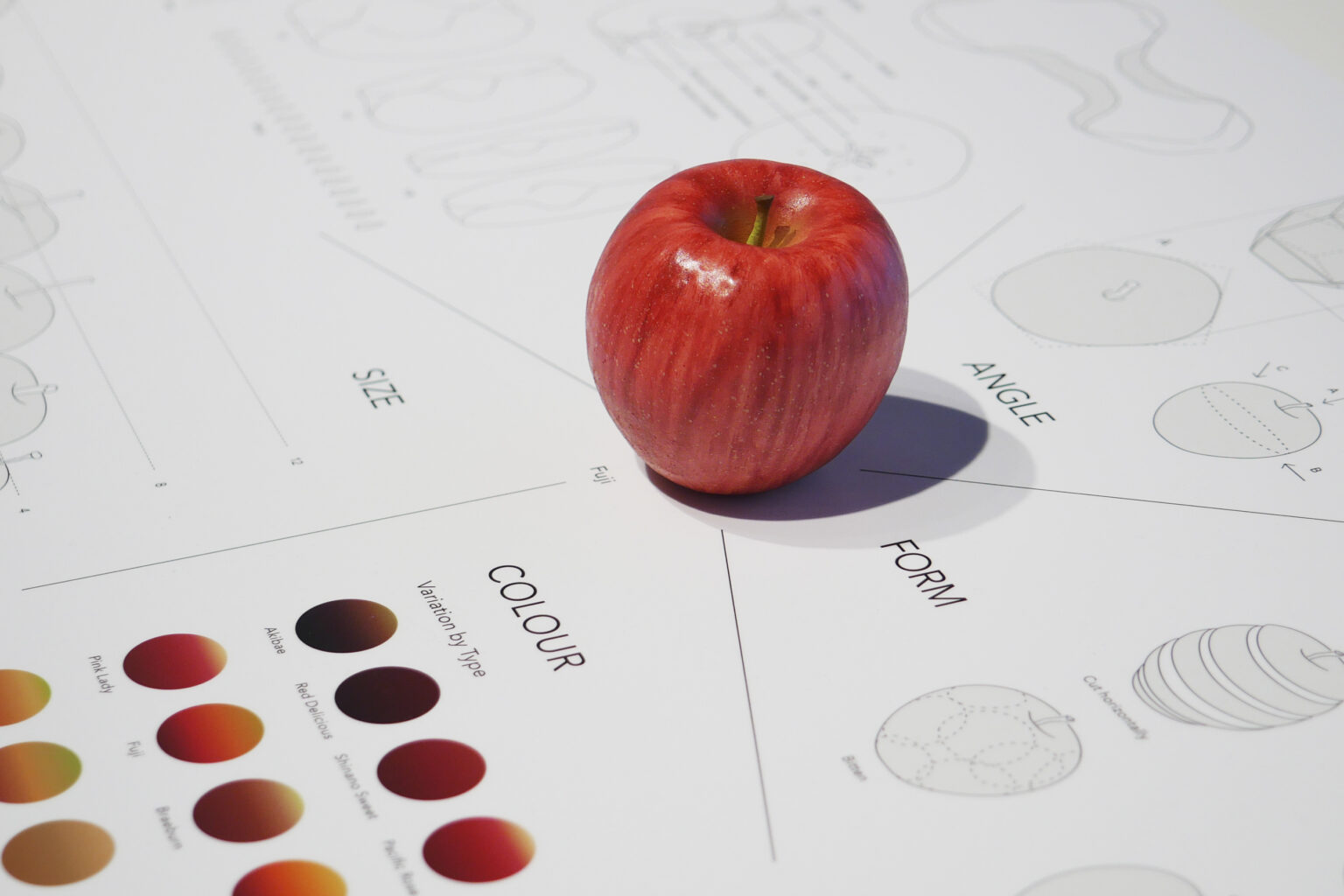
The goal of pictogram design is to create symbols that transcend language and cultural boundaries. This is achieved by stripping away non-essential details to reveal the core essence. We start by sketching a rough outline. This is refined with a focus on simplicity, balance and clarity, gradually shaping it into a more recognizable form that can be easily understood by a wide audience.
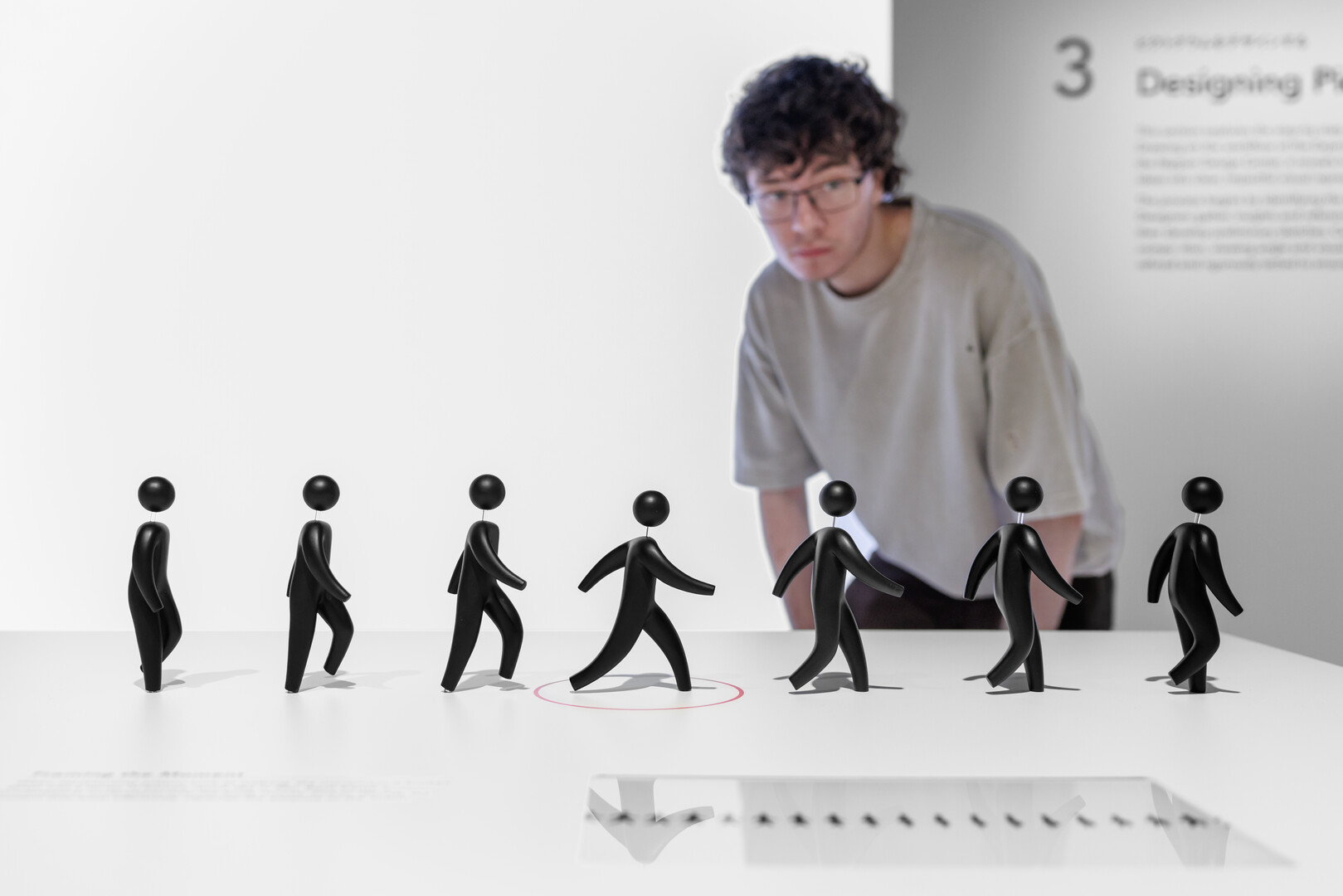
When representing actions like walking, the movement is broken down into a series of frames, like in film. Each frame is studied to understand how the body moves, and to identify the moment that most effectively captures the essence of the action.
Defining What Matters
The goal of pictogram design is to create symbols that transcend language and cultural boundaries. This is achieved by stripping away non-essential details to reveal the core essence. We start by sketching a rough outline. This is refined with a focus on simplicity, balance and clarity, gradually shaping it into a more recognizable form that can be easily understood by a wide audience.
When representing actions like walking, the movement is broken down into a series of frames, like in film. Each frame is studied to understand how the body moves, and to identify the moment that most effectively captures the essence of the action.
Grid System
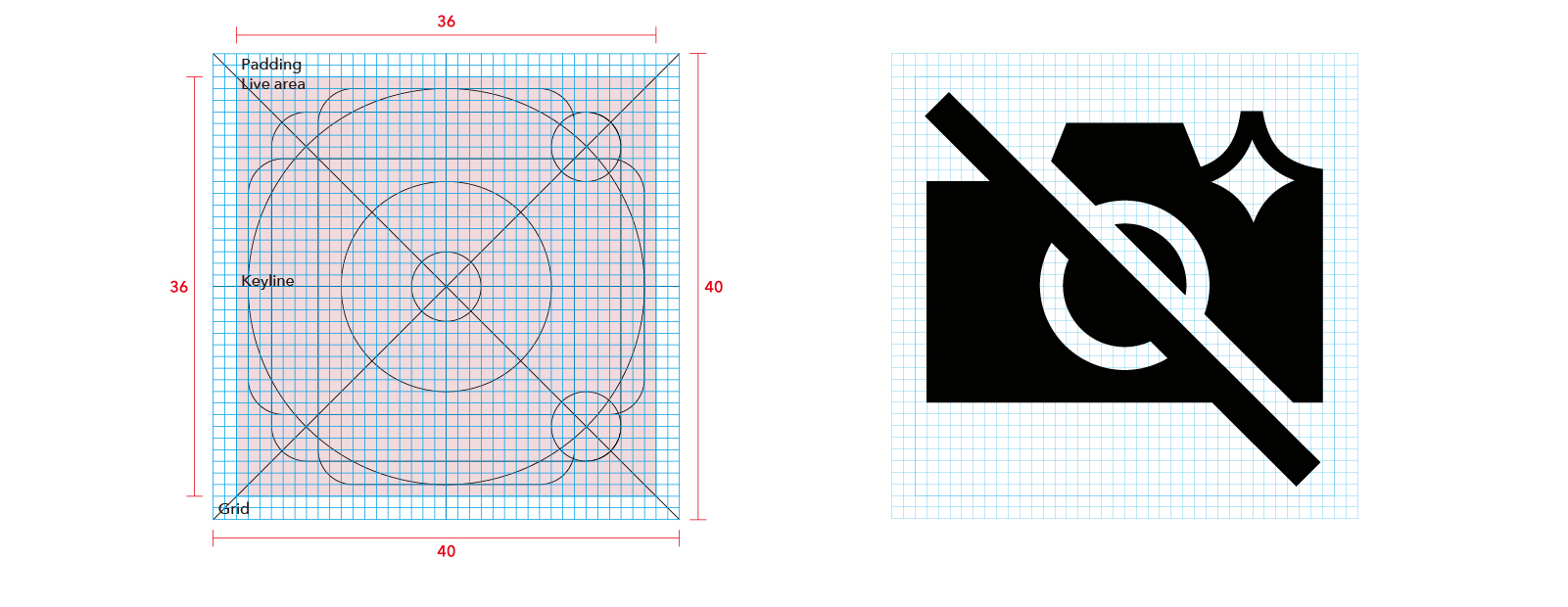
Designers use grids all the time to create balanced and cohesive compositions. Grids can be made of straight or curved lines and align the placement of elements, ensuring consistency and establishing a clear visual hierarchy. Grids can also serve as templates to maintain a cohesive look across a series of images.
The pictograms in this project use a 40×40 grid specially designed by the Nippon Design Center. A margin or padding space of two cells is kept around the edge of the grid, leaving a workable area of 36×36 cells. To maximize this limited space, line weight and spacing between elements needs to be considered to ensure clarity and impact.
Grid System
Designers use grids all the time to create balanced and cohesive compositions. Grids can be made of straight or curved lines and align the placement of elements, ensuring consistency and establishing a clear visual hierarchy. Grids can also serve as templates to maintain a cohesive look across a series of images.
The pictograms in this project use a 40×40 grid specially designed by the Nippon Design Center. A margin or padding space of two cells is kept around the edge of the grid, leaving a workable area of 36×36 cells. To maximize this limited space, line weight and spacing between elements needs to be considered to ensure clarity and impact.
Compositions, Angles, and Forms
By arranging elements like lines and shapes, the designer directs the viewer’s gaze to the most pertinent information. For a pictogram to be successful, a designer must consider balance, rhythm, contrast and appropriate negative space.
Selecting the most effective perspective is a key step in designing pictograms. The designer prioritizes a vantage point that clearly defines the subject, even at a quick glance. Repetition or variation of shapes within a composition can also add visual interest or enhance unity, with repeated forms creating a sense of cohesion.
Compositions, Angles, and Forms
By arranging elements like lines and shapes, the designer directs the viewer’s gaze to the most pertinent information. For a pictogram to be successful, a designer must consider balance, rhythm, contrast and appropriate negative space.
Selecting the most effective perspective is a key step in designing pictograms. The designer prioritizes a vantage point that clearly defines the subject, even at a quick glance. Repetition or variation of shapes within a composition can also add visual interest or enhance unity, with repeated forms creating a sense of cohesion.
Using Basic Shapes
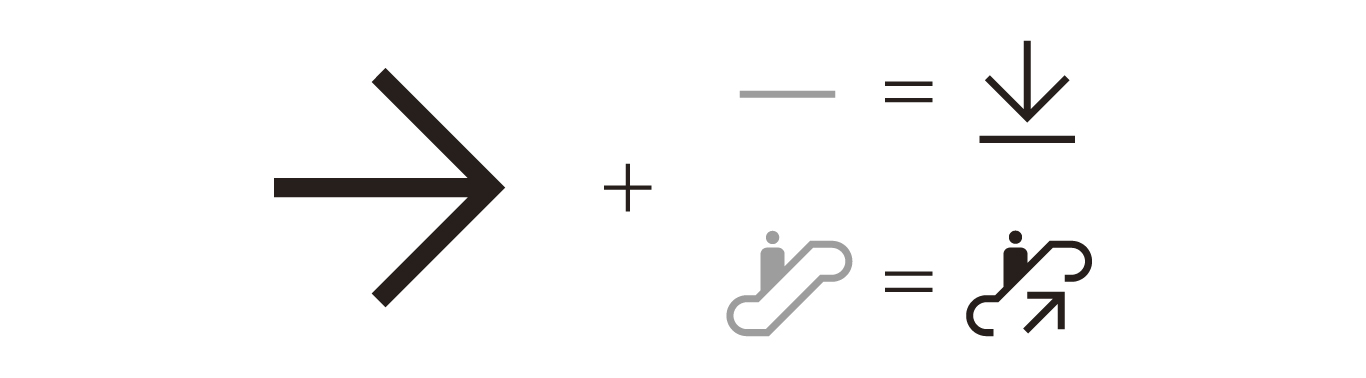
Shapes can be used in endless combinations. The example below shows how basic shapes can be arranged to create new meanings and images. An arrow can signify “go,” but when it is used in combination with another pictogram, it can also help us understand a specific direction or action, like “download.”
Using Basic Shapes
Shapes can be used in endless combinations. The example below shows how basic shapes can be arranged to create new meanings and images. An arrow can signify “go,” but when it is used in combination with another pictogram, it can also help us understand a specific direction or action, like “download.”
The Power of Detail
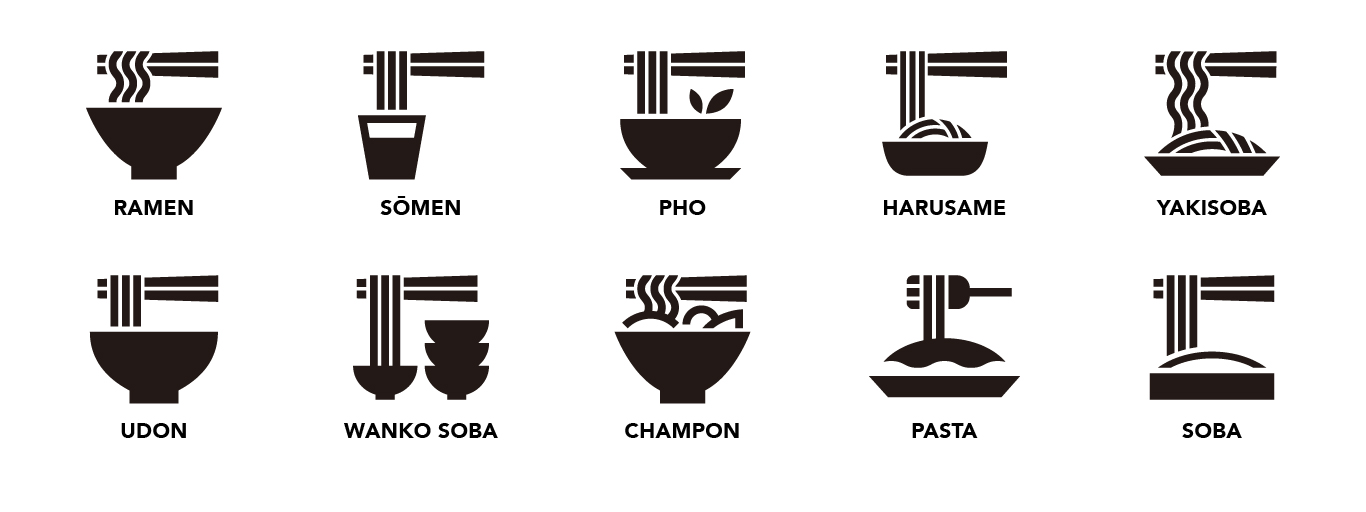
Many noodle dishes share common elements like long strands and bowls, which makes them similar at a glance. But to represent them clearly in pictograms, details such as thickness, broth vs. dry preparation, toppings, or cultural cues need to be shown differently so each dish is recognizable. This sensitivity to detail is crucial in pictogram design, where even small visual differences can carry meaning, helping to distinguish between similar objects or concepts.
The Power of Detail
Many noodle dishes share common elements like long strands and bowls, which makes them similar at a glance. But to represent them clearly in pictograms, details such as thickness, broth vs. dry preparation, toppings, or cultural cues need to be shown differently so each dish is recognizable. This sensitivity to detail is crucial in pictogram design, where even small visual differences can carry meaning, helping to distinguish between similar objects or concepts.
Visit the Pictograms: Iconic Japanese Designs exhibition to learn more about this design process and the history of visual communication. This exhibition is on display at JAPAN HOUSE Los Angeles from February 12 – May 3, 2026.
Visit the Pictograms: Iconic Japanese Designs exhibition to learn more about this design process and the history of visual communication. This exhibition is on display at JAPAN HOUSE Los Angeles from February 12 – May 3, 2026.
Written by Daigo Daikoku
CEO and Art Director
Edited by ZiZi Spak
Designer
Gallery Photography by Jérémie Souteyrat
Written by Daigo Daikoku
CEO and Art Director
Edited by ZiZi Spak
Designer
Gallery Photography by Jérémie Souteyrat